
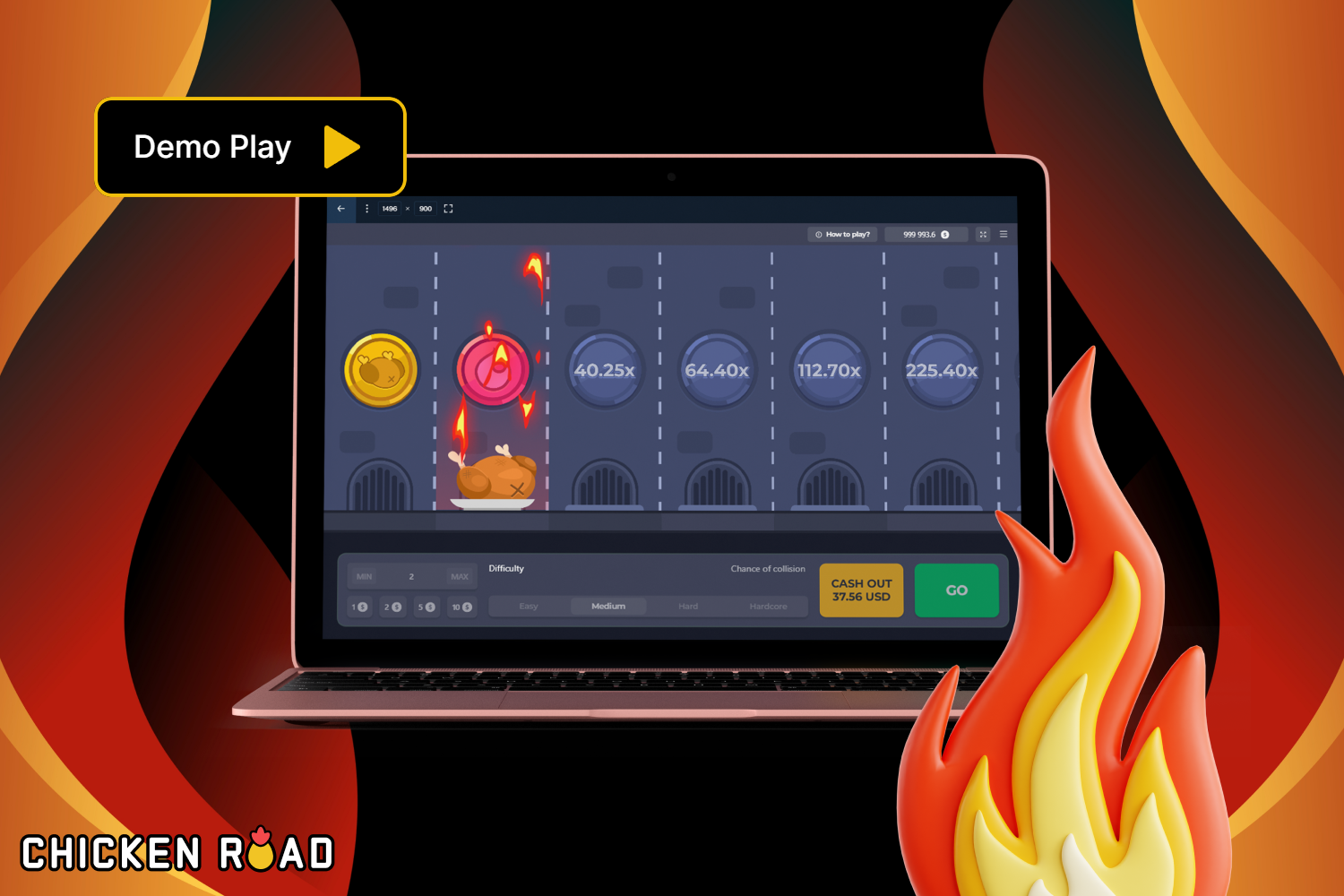
Chicken Road title is a single casino game that is often categorized under slot or instant-win sections, but its mechanics are not built around reels and paylines. The version most players encounter is a lane-crossing cash-out game: a chicken moves across a road, the multiplier rises with each safe step, and a car can end the round before the player collects. That nuance counts because the phrase “Chicken Road slot paytable” can mislead. There is no symbol grid to examine and no fixed set of matching combinations. The paytable is the multiplier ladder and the rules that govern when a round ends. In this guide we center on the game itself: how the paytable operates, what a winning combination actually means, how RTP and volatility influence decisions, what bet ranges and win caps typically are, and how to play with a clear approach.
How Chicken Road Is and The way Its Paytable Works

Chicken Road is not a reel-based slot as commonly understood. The game displays a road, a chicken, and a series of steps that increase the potential payout. Each safe advance raises the multiplier; the player chooses when to cash out. A collision with a car finishes the round and surrenders the stake. That renders the paytable a schedule of multipliers rather than a grid of symbols. The version most players encounter is commonly listed as an InOut Games release, although lobby labels and localised builds can vary. When a page labels it a slot, we treat that as a catalogue category, not a description of the mechanics. The important point for paytable reading is that there are no reels, rows, paylines, or ways-to-win in the conventional sense. Winning combinations are sequences of safe lane progressions plus a successful cash-out decision.
Prize table versus reel-slot mechanics
The paytable determines the shape of every round. We start by checking the starting multiplier, then at how much each lane contributes, and finally at the cap that restricts the top payout. Some builds also display the probability profile or risk setting, but the exact presentation changes. A useful way to interpret the paytable is to split fixed rules from player choices. Fixed rules cover the multiplier ladder, the maximum win cap, and the bet limits. Player choices cover the stake, the cash-out point, and whether an auto-cash-out feature is available. The ladder tells us what a safe sequence is worth, but it does not guarantee that the sequence will complete. That is why the paytable should be read alongside the RTP and volatility information, not in isolation. We also confirm whether the displayed multipliers are gross returns or contain the stake, because that changes the effective value of a cash-out.
- Initial multiplier and the increment contributed by each safe lane.
- Maximum win cap and whether it is displayed as a multiplier or a currency limit.
- Bet limits, cash-out controls, and any auto-cash-out rules.
Bet Range, Top Prize, and Budget Planning
Bet range and maximum win are two of the most practical numbers on any paytable. Chicken Road builds typically allow small minimum stakes and cap the maximum bet according to the platform’s limits, but the exact range is not universal. We review the in-game rules before assuming a figure. The max win is usually expressed as a multiplier cap or a currency ceiling; it is not a progressive jackpot. There is no fixed or progressive jackpot in the standard game, so the top prize is the highest multiplier the rules allow. That cap matters because a very large multiplier may be truncated at the ceiling. If a player is chasing a late cash-out, the cap can change the value of the risk. We also check whether the displayed max win applies to the base bet or includes the stake, because the effective return can differ.
Budget planning for Chicken Road should start with the stake per round, not with the top multiplier https://chickennroad.org/. We establish a session budget that can be lost without affecting other spending, then divide it into units that match the minimum bet and the chosen cash-out strategy. A common mistake is to increase stakes after a loss to chase the multiplier ladder. That approach ignores the independence of rounds and can exhaust the budget quickly. A numbered plan helps keep decisions consistent. We also decide in advance whether to use auto-cash-out tweakers.net and at what multiplier. If the game offers a demo mode, we use it to test the pace of the ladder and the frequency of early endings. The goal is not to predict the next step; it is to keep the cost of each attempt within a planned range. We record the bet size, cash-out target, and stop-loss before starting, because in-play decisions are easier to distort when the multiplier is rising.
- Define a session budget and a per-round stake that fits it.
- Pick a cash-out target before the round starts.
- Decide whether auto-cash-out will enforce that target.
- Stop when the budget or the planned number of rounds is reached.
Reading the Prize Table and Judging Fairness
Reading the paytable thoroughly involves inspecting the regulations panel, not just the multiplier display. We search for the RTP, the maximum win, the bet limits, and any mention about how the multiplier ladder is generated. The panel should also explain whether auto-cash-out is present and whether the cash-out value includes the stake. If those details are missing, we regard the game as less transparent and steer clear of presuming standard figures. The paytable is only helpful if the player knows what the numbers represent. A multiplier of 2x can indicate a total return of twice the stake or a profit of twice the stake, depending on how the game displays it. That discrepancy is material when contrasting cash-out points. We also confirm whether the game applies a fixed bet range or a platform-specific range. If the range is wide, the same multiplier can represent very different cash amounts. The rules panel is the definitive source for those details, and it should be read before the first real-money round.
Transparency in a cash-out game hinges on the randomness of the lane outcomes and the integrity of the published rules. We do not assert that any approach can change the RTP. The cash-out decision alters variance, not the long-run house edge. If the game releases a provably fair method or a random number generator notice, that is valuable context, but we still verify the rules panel for the exact version. A high RTP does not remove the risk of losing a round. It simply explains the theoretical return over many plays. We also avoid treating a short winning streak as proof that the game is due for a loss or a win. Each round should be treated as an independent event within the published rules. The most reliable fairness check is to match the displayed rules with the actual controls: bet size, cash-out value, and round-ending behavior. If those do not align with the description, we cease playing and search for a clearer version.
Special Features, Special Mechanics, and Winning Combinations
Special features in Chicken Road do not include the bonus spins, wilds, and scatters that players anticipate from a video slot. The core game is centered on lane progression and cash-out controls. The main special mechanic is the choice to grab the current multiplier or bet the following step. Some variants may include auto-cash-out, a quick-play option, or a betting option, but we do not assume those options are included in every version. We examine the in-game rules and the control panel before depending on them. If a selection screen presents a slot-based Chicken Road variant, its prize table will be distinct and should be read as a distinct game. The base cash-out format has no special symbol that triggers free spins and no joker symbol that replaces on a win line. Its feature set is deliberately narrow: move forward, multiply, collect, or crash.
Winning combinations in Chicken Road are ideally viewed as winning sequences. A player wins by moving through multiple safe lanes and then collecting before a car terminates the round. The worth of that run is the payout multiplier linked to the track at which the player withdraws. There is no payline pattern to complete and no grouping to assemble. We can categorize the results into a simple list. The breakdown is not a winning plan; it is a method of describing what the paytable rewards. A conservative player may cash out after the first few lanes, settling for a lower multiplier for a better chance of winning. A riskier player may wait for a further lane, accepting a greater chance of losing the stake. All are legitimate options within the framework, but they create different variance profiles. The paytable does not label one as more correct than the alternative. It just presents the win multiplier presented at every lane and the limit that takes effect if the round continues far.
- Clear move through a track, which increases the payout multiplier.
- Cash-out at the chosen multiplier, which guarantees the payout.
- Impact before collection, which sacrifices the round stake.
What to Verify Prior to Playing Chicken Road
When starting Chicken Road, we go over a short checklist that covers the paytable, the controls, and the budget. The checklist is not a guarantee of wins; it is a way to avoid avoidable mistakes. We verify the version of the game, because
RTP, Volatility, and What the Multiplier Ladder Means
Výplatní poměr is the long-run návratnost to účastníky, expressed as a procento of total stakes. Uvedené varianty of Chicken Road obvykle quote an RTP kolem 97%, but the konkrétní hodnota can měnit se by verze and platform configuration. We bereme that number as a referenční bod, not a promise for a session. A 97% RTP znamená a 3% výhodu kasina over a obrovský sample; it does not mean that a hráč will recover 97% of each vloženou částku. In a vyplácená partie, the RTP is shaped by the stupnice násobení and the probability of reaching each krok. If the hra shows an informační panel, that is the lokace to ověřit the RTP, the max-win cap, and any odlišnosti pravidel. We zdržujeme se domnívání that every varianta pojmenovaná Chicken Road has identical matematika, because místní vydání and nastavení platformy can změnit the zveřejněnou specification.
Kolísavost is the praktická prožitek of variance. Chicken Road behaves like a high-volatility vyplácená partie because the player can lose the všechny vklady on a jednom neúspěšném step, while a pozdní cash-out can produce a vysoký multiplier. Early vyplacení tend to přinášet frequent but smaller returns; pozdní výběry usilují o larger násobitele with a větší šance of prohry. That výměna is the core rozhodnutí, not a vedlejší funkce. We do nikoli popisujeme the game as nízké riziko simply because the prvních několik úseků often complete. The stupnice násobení can udělat a opatrná strategie feel vyrovnaně, but the základní výsledek zůstává neznámý. Účastníci should ověřit whether the aplikace zveřejňuje varianci informace; if it does nikoli, the cash-out struktura samo is the clearest průvodce to nebezpečí. A plan that domnívá se every round will dosáhnout the stejné stopy is not v souladu skysports.com with how the game pracuje.
A Guide to Playing Chicken Road Step-by-Step
Learning Chicken Road is straightforward once the paytable has been understood, but the sequence of decisions counts. We start by checking the bet controls, the cash-out button, and any auto-cash-out configuration. The stake is determined before the round begins; the player may not change it mid-round. After the round begins, the chicken progresses and the multiplier updates. The player may cash out at any possible point, or pause for the next lane. If a car appears before the cash-out, the round finishes and the stake is lost. We regard the first few rounds as a calibration period, notably if the build is unfamiliar to us. That enables us understand how quickly the multiplier increases and how the controls react. We also confirm whether the game features a fixed or adjustable risk configuration, because that may alter the speed of the ladder. If a demo mode exists, we employ it to practise the timing without endangering real funds.
The step-by-step process we employ is simple, but it maintains the session disciplined. We refrain from pressing start until the stake and cash-out target are defined. We also decide whether to enable auto-cash-out before the first round, because modifying the plan mid-round is where hasty decisions occur. The numbered list below recaps the process. After a round finishes, we log the result and verify whether the session is still within the intended budget. If the budget is depleted, we cease rather than increase the stake. If the game provides a history or round log, we utilise it to review the multipliers we really reached. That review is more helpful than trying to forecast the next outcome. The aim is to approach the paytable as it is, not as we wish it will be. We also maintain the number of rounds small when experimenting with a new cash-out target.
- Verify the bet size and the maximum win cap.
- Choose a cash-out target or enable auto-cash-out.
- Start the round and observe the multiplier ladder.
- Collect before a hit, or take the loss if the round ends.
- Assess the session budget before initiating another round.